Thin, low-loft design
Developing compact insulation systems to reduce bulk.

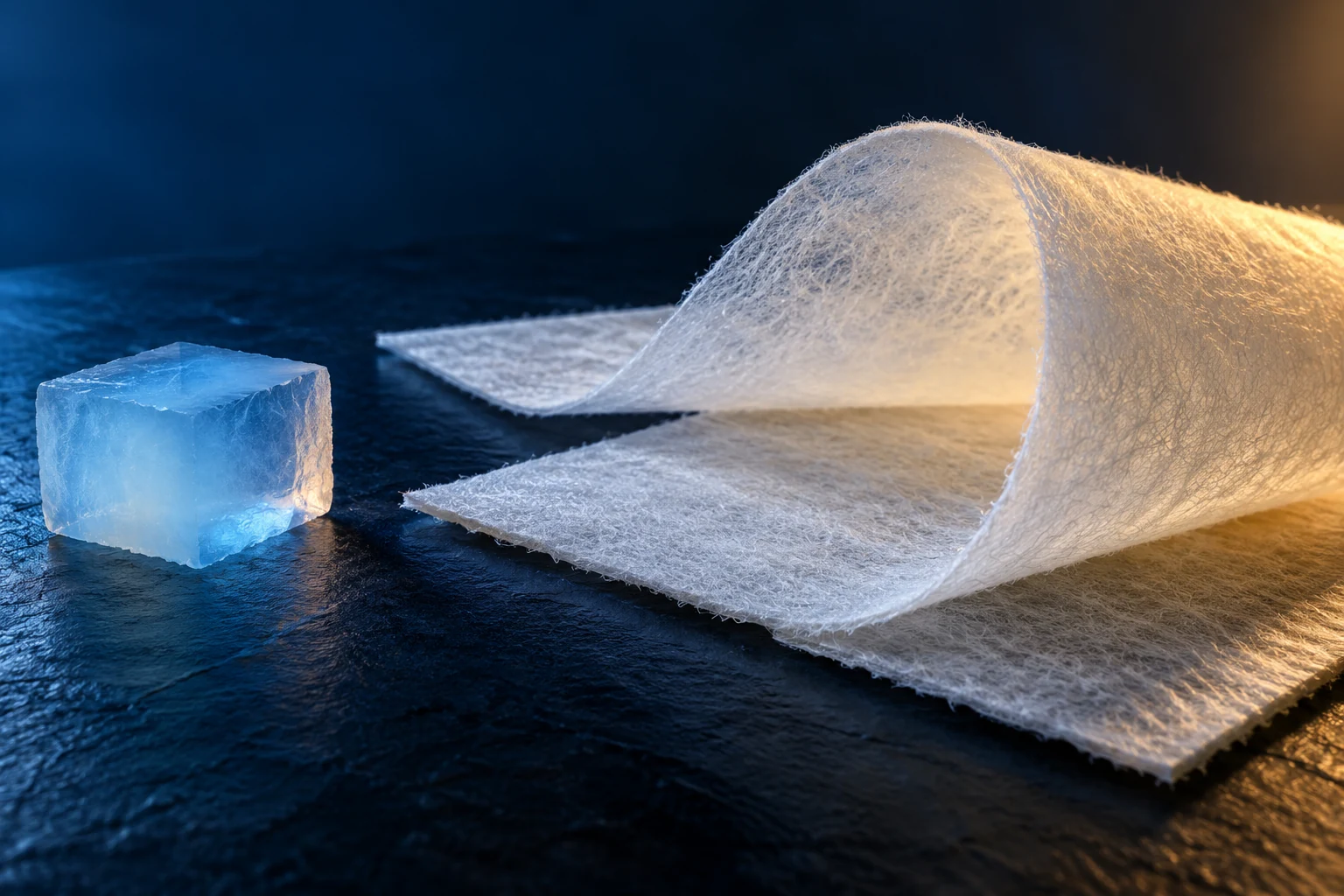
Silica aerogel technology
We develop silica aerogel–fibre composite concepts for lightweight, low-loft, super-hydrophobic insulation across demanding thermal applications.
Proposed composite material target; measurement conditions and test results must be established.
Intended operating environment for cold-weather insulation research, subject to system validation.
A development route aimed at cost-effective processing and industrial scalability.
Material architecture
Silica aerogels offer a highly porous platform for thermal insulation research. In monolithic form, fragility can make handling and integration difficult.
Our proposed approach supports the aerogel within a low-loft ceramic or glass-fibre felt. The objective is to retain useful insulation characteristics while improving the integrity and adaptability of the composite.
Surface functionalisation and process engineering are central to the intended hydrophobic performance and ambient-pressure drying route.
Conceptual composite structure
Schematic illustration of a fibre-supported porous composite. Shapes and proportions do not represent measured microstructure.
Design objectives
The advantages we are engineering towards, refined through material development, testing and application feedback.
Developing compact insulation systems to reduce bulk.
Aiming for useful thermal performance with less material mass.
Engineering super-hydrophobic behaviour for moisture challenges.
Fibre-supported concepts designed for handling and integration.
A development priority for cleaner handling and material retention.
An ambient-pressure drying route aimed at industrial feasibility.
Targeting low thermal conductivity and lower insulation energy demand.
Process engineering directed towards economical manufacture.
An industrially minded route
Our research explores ambient-pressure drying as an alternative processing route, with cost, handling and future scale-up considered from the start.
Develop silica aerogel chemistry and the intended material structure.
Engineer fibre-supported composites and surface functionality.
Refine an ambient-pressure drying approach for composite preparation.
Characterise thermal, mechanical, moisture and application behaviour.
Application-led prototyping
Prototype development explores tailored structures and functionalities for severe-cold insulation, industrial thermal management and other application-specific requirements.
See application opportunities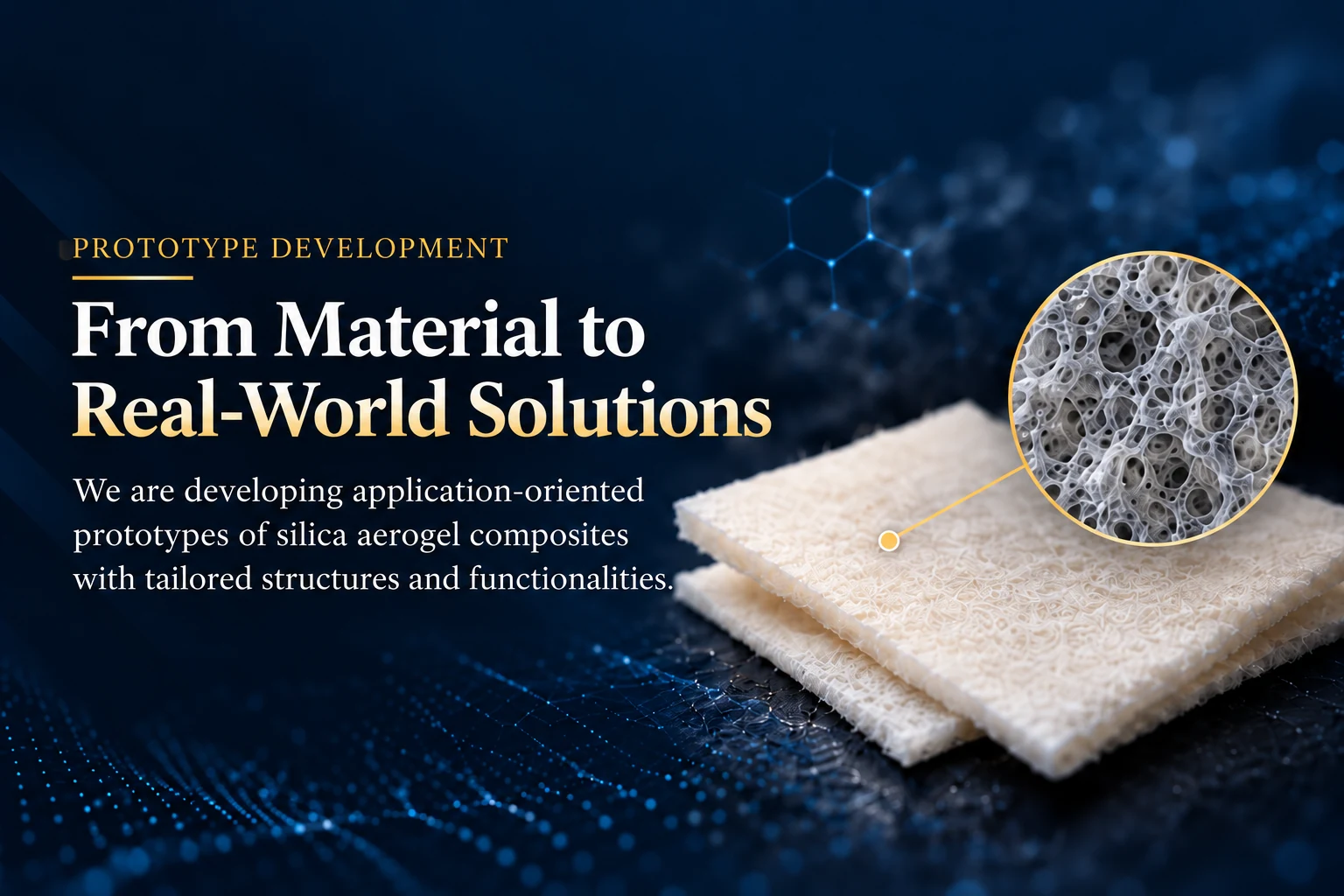
Define a material challenge